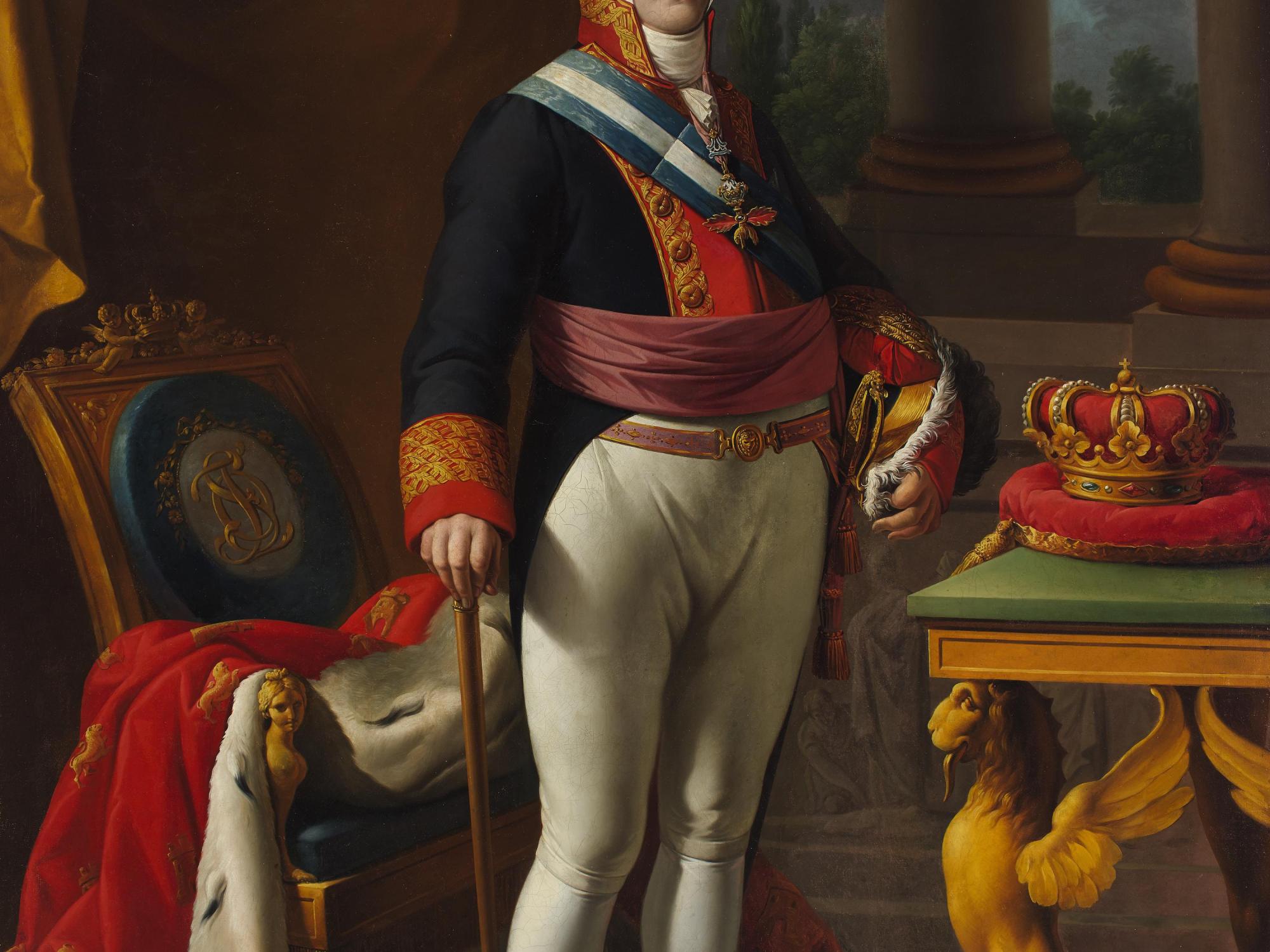
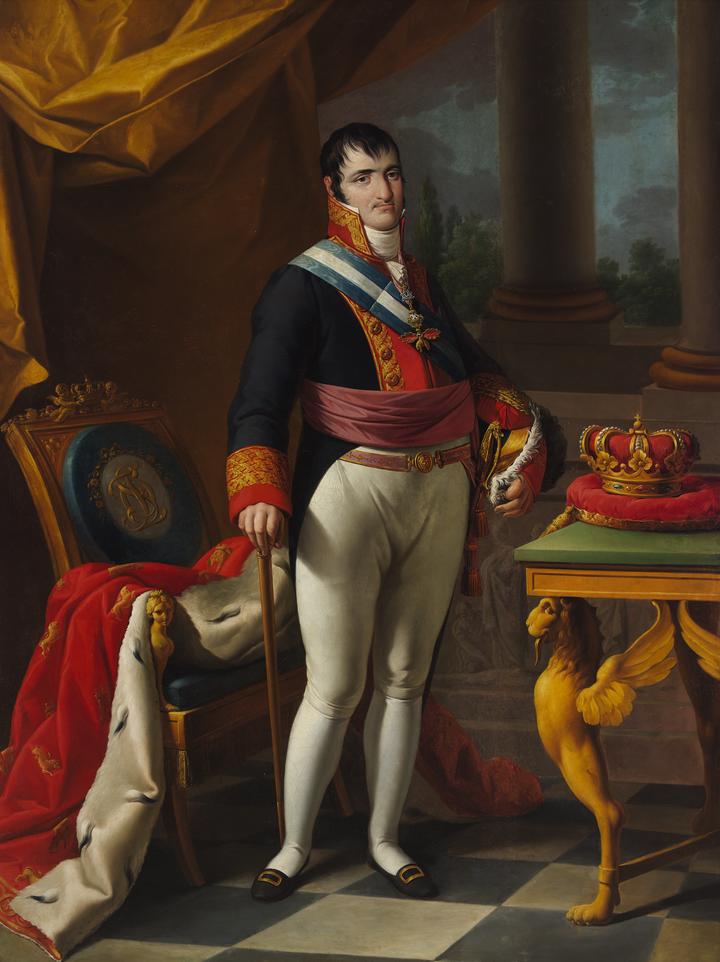
Once the War of Independence finished, Ferdinand VII came back to Spain as a cosequence of the Treaty of Valençay. In April 1814, a group of absolutist deputies gave Fernando VII a document known as Manifiesto de los Persas in which they asked him the return to the absolutism.

The second part of the reign could be divided into three stages:
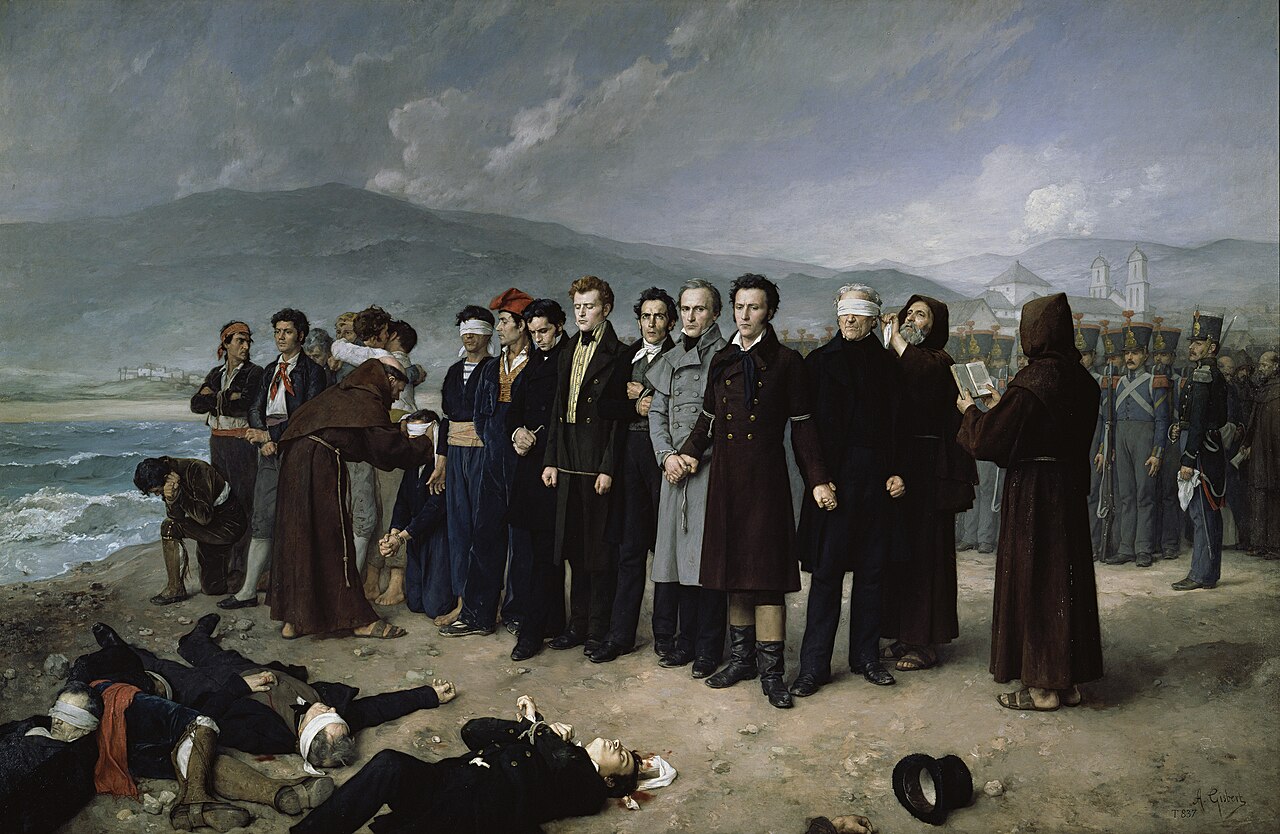
- The absolutism sexennial (1814-1820) characterized by the abolition of the Constitution of 1812 and all the laws passed by the Cortes of Cadiz. Fernando VII, on 4th May 1814 approved a decree in Valencia, he dissolved the Cortes, abolished the Constitution and all the legislative laws made by the Cortes de Cádiz. This represents the persecution of the liberals and the comeback to Absolutism. Groups of liberals organised pronunciamientos (Espoz y Mina in 1814, Porlier in 1815 and Torrijos in 1817), demanding that the Constitution be reinstated.

- The Liberal Triennium (1820-1823). Liberals conspired until the uprising of the troops travelling to America in Cabezas de San Juan and led by Rafael de Riego deposed the absolutists. Ferdinand VII was forced to restore the Constitution of Cadiz as well as all the laws passed by the Cortes during the War of Independence. Ferdinand VII requested the aid of the Holy Alliance and 1823 The Cien mil hijos de San Luis (One Hundred Thousand Sons of Saint Louis) invaded Spain and sent liberals away from the government.


- The Ominous Decade (1823-1833) was marked for the persecution of liberals. In spite of repression, the liberal pronunciamientos continued. One of the few positive factors during this ominous decade was the reform of the Hacienda began by the minister López Ballesteros. The reform got a certain budget balance, maybe because of having less military expenses after the independence of the colonies. Around 1830, Ferdinand VII revoked the Salic Law – which forbade women inheriting the crown) as his daughter Isabel was born. Carlos of Bourbon, Ferdinand´s brother, did not accept the idea of losing the right to the throne. So, absolutists supported him while Ferdinand and his wife Maria Christina approached to liberals.


Upon Ferdinand VII’s death in 1833, a civil war broke out, the Carlist War.
 3travellingacrosstime