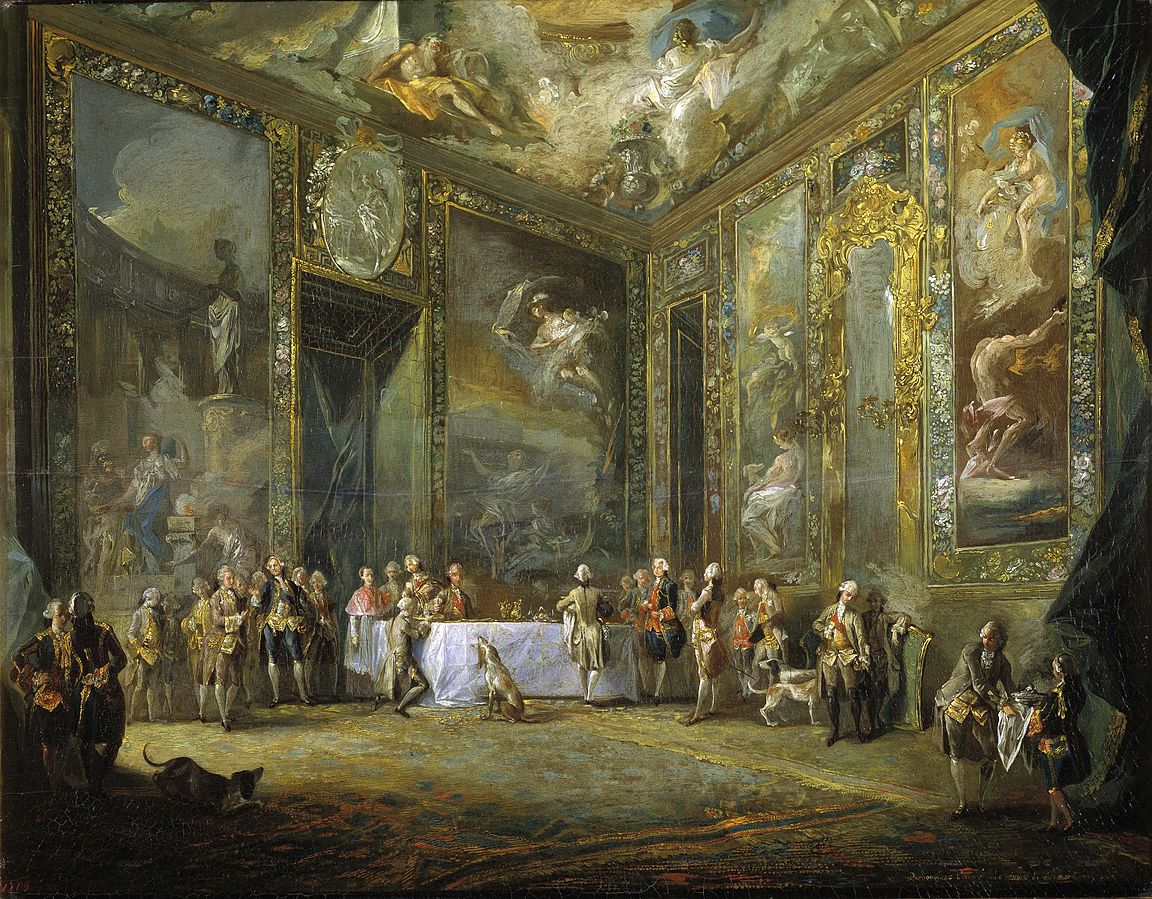
CHARLES III REIGN
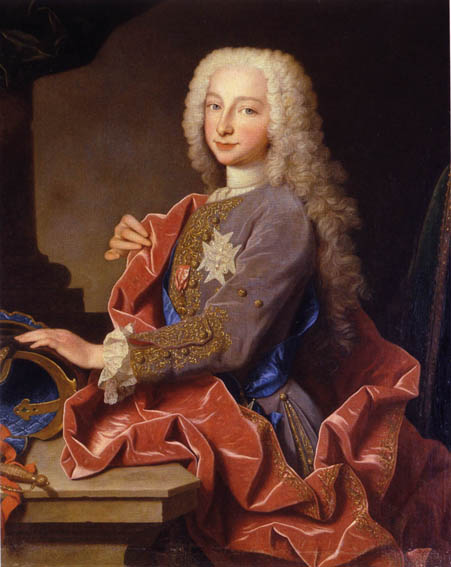

Charles III was duke of Parma and king of Naples (before becoming king of Spain (1759–1788).
Foreign policy
Foreign policy was the greatest priority of his government because Spain was a world colonial power. Alliances with France, however, brought wars with Great Britain , and Spain lost territories (including
Florida). But the support to American rebels gave Spain control of Louisiana.

Domestic policy
Charles III appointed efficient ministers whose missions were to reinforce the crown, improve Madrid initiated riots in 1766. To restore internal stability and peace, Charles III dismissed his Italian ministers, expelled the Jesuits from Spain and the colonies (1767), and sought a new team of ministers among them Pedro Rodríguez Campomanes the Count of Floridablanca (1728–1808), and José de Gálvez.

With his new ministers, Charles III undertook reforms:
- The subordination of the church to the Bourbon monarchy was a major goal of Charles III. Consequently, he expelled the Jesuits and reduced the power of the Inquisition.
- Economic reforms were less successful than administrative and religious reforms. The reduction of institutional obstacles to free trade in grain in the peninsula and to free trade between cities of the Spanish Empire (1765–1778) did little to change limits to sustained economic growth.
- Hunger, bad crops, and privileged ownership and distribution of land remained the norm in rural Spain. The owners of the land were the nobility, the clergy, the municipal councils, and the crown so this fact was an obstacle to increased agricultural productivity.
- In the first seven years of Charles’s government, Italians served as the ministers of war, state, and finance. The law forbidding men to wear traditional broad hats and long capes aroused opposition against the Italian ministers. Sectors of the nobility, the clergy, and thousands of people from
- Charles III and his ministers reinforced the power of the crown and rationalized colonial administration. However, they did not change the traditional social order.

 3travellingacrosstime